Bekomochi べこ餅
| Prefecture | Hokkaido (北海道) |
|---|---|
| Region | Hokkaido |
| Japanese name | べこ餅(べこもち) |
| Reading | Bekomochi |
| Home area | All over the country. |
| Main ingredients | So, if you're a little girl, you're going to have to do something about it. |
History and Origins
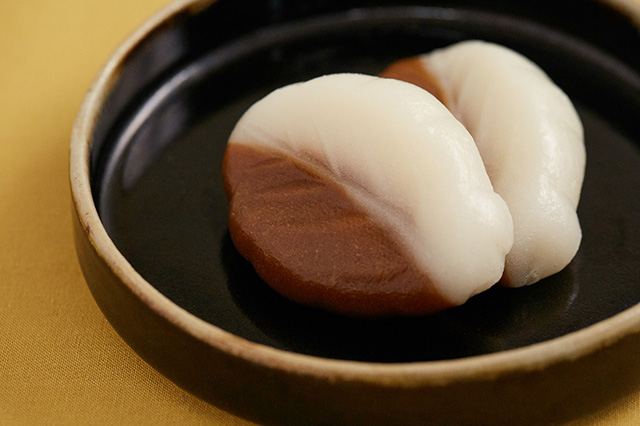
The old Hokkaido people have always been so familiar with it that it is a local sweet with the pattern of the leaves of trees that have been given mainly white and black. At Hokkaido, they are often eaten on the last paragraph. The same ingredients are also found in Aomori Prefecture, but there is a local sweet called "bayaki" with different shapes and shapes. The leaves of the tree, with two white and black colors and leaves, are the order of the "babe," but now there are various "basins" in the southern part of the country. The black sugars are the only dark-colored "Create" and artificial colors. It's not a leafy shape, but there's also a "basin," such as a flower, a rectangle, and so on. There are theories about the birth. There's a theory that Yamagata Prefecture's local sweets evolved independently at Hokkaido into a unique leaf pattern. In some parts of the Southeast area today, "Kichiji" is still called "Founded" by some. It is said that the root of the name was derived from the name of the holostein, which means cow, because the color of the black sugar is associated with the color of the holstein.
When It Is Eaten
It is often eaten mainly in the southernmost part of the country, in the middle of May. They are also eaten on New Year's Day, on his bank, on the anniversary of the wedding. In the past, many families had wooden molds for making "decision" and made it by hand. In the meantime, since it's sold in supermarkets for a year, you can eat it other than the Hale day. It's also a popular local candy for children.
How It Is Eaten
The fabrics mixed with the powder and sugar are prepared and boiled. White fabrics are made by mixing white sugar and black with black sugar. Sometimes you can make green fabric with a daisy in it. The common "pangs" can be used to form leaves in trees, but it can be used to form leaves without using wood, or to form flowers, and it can vary from home to store. If it's too much, it will last a day if it's stored in a freezer. It's delicious and sweet, and it's known to adults as well as children.
Recipe — Serves 4
Ingredients
- 70 g shiratama rice flour
- 30 g joshinko rice flour
- 4 tbsp boiling water
- 50 g refined white sugar
- a pinch salt
- 70 g shiratama rice flour
- 30 g joshinko rice flour
- 4 tbsp boiling water
- 50 g brown sugar
- a pinch salt
Method
- I'll keep the peppers and the white flour together.
- I make white fabric. Add white sugar with salt and boiling water, melt it, and paste half the flour in the mixture. If you want it to dry, add enough water to dry by hand and adjust it to become more fine. The brown cloth is made into a leafy shape by boiling the black sugar in boiling water, adding salt and then sticking into the rest of the flour that has been mixed together. The two colors are combined into a bar, and then forming a leaf shape in the tree. (Female pulse is made from the back of a knife)
- We place kitchen paper on the steamer, put two together, and then we water it for about 20 minutes. After taking it out, I'll put out a kiss over my side.
More About Bekomochi
Beekji, or Suki, is one of the sweets. It's part of Hokkaido to part the Tohoku region and can be eaten at the end of May. It's a celebration of the status quo like a cucumber in other areas.
Overview
Aomori Prefecture
Aomori Prefecture's "feeding" is a recipe for making a pattern with each of the pieces (e.g. black dough with a color on the fabric, such as white dough with a mixture of rice and rice flour with white and hot water), and black dough with a color on the fabric, and so forth). Although in the lower north, the Edo period was one of the traditional hale diets of the late days of the Edo period, the custom of dealing with gambling as a hale has been weakened by the changing social and economic factors of the era. Under the background of the 1978 U.S. consumption campaign, it was revived as a "bubble" whose name and design were reserved by agricultural developmentists and the Youth-Aided Group in the Middle-School area. There's been a connection between "silence" and the Nirvana meeting in the Sasashi district.
In the time of the lottery, two colors, mixed with dark sugar and tasteless whiteness, were fundamental and were simple, with a pattern of roll or tabour. However, since the 1980s, black sugar has been so sweet and mossy that powdered coffee and cocoa have been used instead, and white sugar has been added to white sugar. Moreover, since about the time we came to be called pets, the color of red, yellow, green and so on has become generalized and the character look has become generalized.
Hokkaido
In Hokkaido district, the "Puychko" is made with a blend of super-renewed and white powder mixed with sugar and hot water, and is made with black dough with black sugar added to the ingredients of white fabric, and is made with black dough, each of which is made with a stick and then added together to form a tree leaf. It is often eaten mainly at the end of May's paragraph, centered around southern areas such as the storage area. Its source is a theory that Yamagata Prefecture's local sweets evolved by themselves at Hokkaido into a unique leafy type of tree. In some parts of the Southeast area today, "Kichiji" is still called "Founded" by some. The name comes from the theory that the white and black colors used the "pocket" meaning the cow from associating with the holstein color, the theory that the mixture of black sugar has become a "polythema" since it is near the color of the color, and the theory is that " rice powder" and sugar" were the main ingredient in which they were called "mixer."
Text adapted and translated from the Japanese Wikipedia article べこもち by its contributors, licensed CC BY-SA 4.0.
Dish data: Ministry of Agriculture, Forestry and Fisheries (MAFF), “Uchi no Kyodo Ryori” (Our Regional Cuisines) database, used under the Public Data License (PDL1.0); translated and adapted from the Japanese original.