Fukidawara ふき俵
| Prefecture | Nara (奈良県) |
|---|---|
| Region | Kinki |
| Japanese name | ふき俵(ふきだわら) |
| Reading | Fukidawara |
| Home area | Otahara area |
| Main ingredients | Soy sauce, rice, leaves. |
History and Origins
In Ogawa area, we say, "The day of the beginning of the rice plant" and pray for "to make rice plants, to make them, to make them, to make them, to make them, to make them, to make them, to make them, to make them. Since I cook them on the first day of the planting, they call it "Friend Food" and "Big Bean Food." Covering with wipe leaves makes the smell of the soap more delicious. The beans that are cooked with rice are thought to grow big and strong. Because she resembles a rice plant, she's called "Saigi." Each of the rice paddies has 12 rice paddies, each with 12 rice paddies, and the whole family joins in prayer for the year's harvest and for the work security during the rice planting period. Then we eat and plant them on the spot.
When It Is Eaten
In the Owada area, Tata planting begins later than late April. Since you're eaten by the "Snuffer's Snack," it's also called "Snack Food."
How It Is Eaten
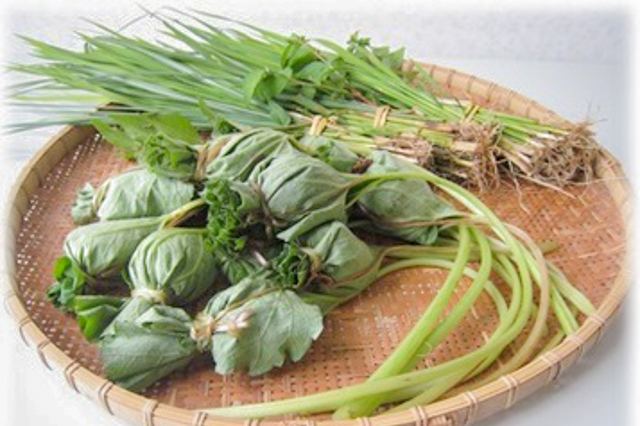
I'm going to use salted rice prepared with roasted beans and rice, wrap it in stem leaves, and make it into a bowl of rice. I'm going to make it look like a bowl of rice. We can eat it as a farm lunch or as a food between rice and rice plants.
Recipe — Serves 6
Ingredients
- 2 cups rice
- 1/3 cups soybeans
- 1/2–1 tsp salt
- 12–14 straw
- 12–14 butterbur (葉のついたもの)
Method
- I'll roast the soybeans and hide them while they're hot.
- I cook rice with a little soy and salt.
- Make a bowl, wrap it in an axle leaf, or wrap it in the skin of a fly. I make it like a silkworm.
Dish data: Ministry of Agriculture, Forestry and Fisheries (MAFF), “Uchi no Kyodo Ryori” (Our Regional Cuisines) database, used under the Public Data License (PDL1.0); translated and adapted from the Japanese original.