Hyūgadon ひゅうが丼
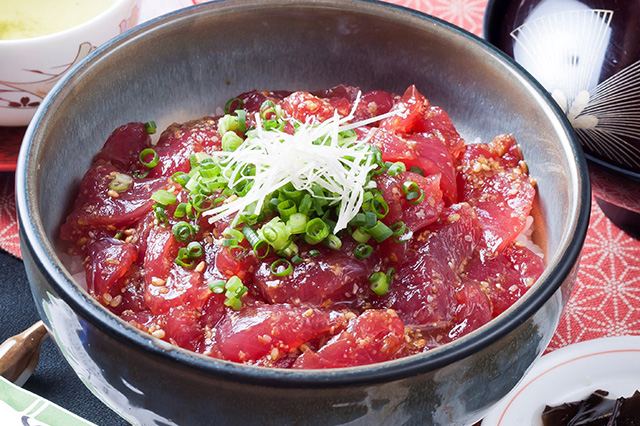
| Prefecture | Oita (大分県) |
|---|---|
| Region | Kyushu & Okinawa |
| Japanese name | ひゅうが丼(ひゅうがどん) |
| Reading | Hyūgadon |
| Home area | I'll bet you don't know. |
| Main ingredients | It's not just tuna. It's rice. |
History and Origins
It's about 14 kilometers from the port of Toshishiyumi in Tsukoku. The island Ward Island, which floats in the rear tap. Fishing has been established since old times, and the history, culture, and landscape of the island's fishing villages and fishermen have been chosen as "the future's future fishing village's legacy." In particular, it is known as the tuna fishing base, and "Suji" is a local dish that has spread widely throughout the island as well as into the area of the Long Island area. The "Swaji" is a special paste containing tuna reds, soy sauces, sugars, wines, eggs, and so on, placed on rice. By working on the flavors, such as onions and candy, you increase your appetite and make them taste better. A fisherman on Terashima Island is a fisherman's dinner that he was so eager to feed quickly during the fishing season. In some areas, it is sometimes called "single" or "snake."
When It Is Eaten
At one time, they were eaten at a celebration seat, such as weddings. It's also provided at a restaurant in the city of Tshuyang. Some stores prepare all-finish course food, and it's not unusual to have "Schiki" added as part of the course. It's also often provided at local exhibitions, cherry fishing and other events.
How It Is Eaten
Oita Prefecture includes other dishes such as "swinging" with a stick on a cuddly and soy sauce, while "snap" is characterized by adding a little sugary paste to anyone with an egg. It's more mossy because the egg yellow suits the tuna. Mix it with onions and onions, and mix it with a taste and put it in a hot meal. I'll leave a few last words behind, and I'll have a cup of tea and I'll have fun twice.
Recipe — Serves 5
Ingredients
- 3 × 180 ml rice
- 2 マグロ
- 20 g toasted sesame seeds
- 40 ml soy sauce
- 30 g sugar
- a pinch mirin
- a pinch sake
- 1 egg yolk
- a pinch small green onion
Method
- I'm going to add a lot of pepper, sugar, and then I'm going to do more.
- Add egg yellow.
- Add alcohol, lentils and soy sauce and add another mix and paste.
- Cut the tuna.
- I put tuna in my back and a little bit of cut-off little bit of rice in my mouth to make it comfortable.
- Put the tuna on top of the hot rice, and rewind it, and decorate it with a small little piece of seam.
More About Hyūgadon
Sakura is the native dish of the old Saoji City of XOita Prefecture, and the old U.S.
There are similar dishes in other parts of the province, and they are called walnuts and walnuts. However, while the brooms and brooms were used to cut fish on a bowl, the walnuts pointed to what only fish would offer, and the food that was carried on top of the rice were called a walnut.
Overview
The fish fish that had been caught by a job were fresh and fresh, and the fish were washed in salt water, mixed with oil, wine and sugar, and onions and other flavors, and served with a mixture of a delicious dish of Goma and onions, which is the humble dish of seamen who had eaten with a great mixture of hot and hot rice.
It is said that the name "snapfish" came from what I was eating. There are various theories about the name "Symbola," which is not clear, but because the recipe was passed on by fishermen from the kobo, or that the dish from Goma is derived from the " rest" and "Foundee" because of the holiday.
In the Japanese Yuka's "Tree" section, this dish is considered along with a large number of other local dishes.
And there's a Fukuoka Prefecture bowl for these very similar native foods.
Materials
Sniff fish, kattuo, Saba and Aji, etc. (The favorites include onions, gomas, raw fruits, blues, wavys, garlic and so on.) )
I'm sorry.
In Oita PrefectureXZIZE, the same food is being served in various other parts of the city. Terishima is a fishing base for tuna, and the main source is tuna. Akira was once eaten at a celebration table.
I've won a two-year gold prize at the Gurme Gurmeg Lampri of the Tulonic summit of the Institution. Also, on the national summit, six-elevenro on the road described as "the origin of the Buddha."
In the name "swing," the name is associated with the country of the sun and the sun, but it doesn't know the origin of the name. There is also the theory that the dish that fishermen ate on the boat was named after the sound of wind sounds like "swings."
Text adapted and translated from the Japanese Wikipedia article あつめし by its contributors, licensed CC BY-SA 4.0.
Dish data: Ministry of Agriculture, Forestry and Fisheries (MAFF), “Uchi no Kyodo Ryori” (Our Regional Cuisines) database, used under the Public Data License (PDL1.0); translated and adapted from the Japanese original.