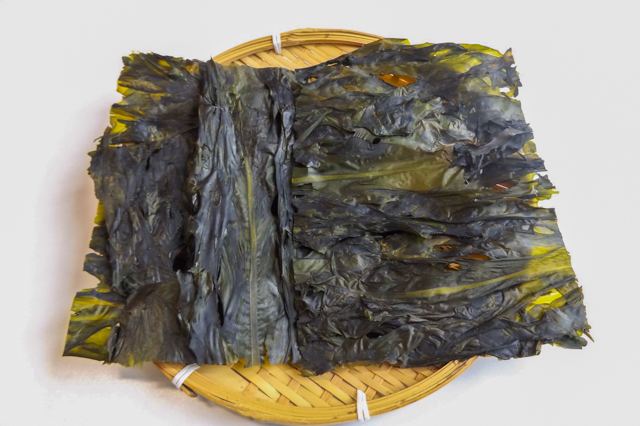
Itawakame 板わかめ
| Prefecture | Tottori (鳥取県) |
|---|---|
| Region | Chugoku |
| Japanese name | 板わかめ(いたわかめ) |
| Reading | Itawakame |
| Home area | All within the district. |
| Main ingredients | You got it. |
History and Origins
The "Tip" is simple and doesn't taste anything when it is dried in rows, as if it were a piece of wood. The salt you have, the flavor alone, will keep you from eating. From the mountainous region of the forest, which is rich in forest, there are many fresh streams pouring into the Sea of Japan, and there are a lot of nutrients flowing from the forest. The recipe that grew up with that nutrition is delicious when it's delicious and when it's eaten as it is. And also, there is a lot of nutrients, such as fiber fiber, alginic acid, and fluoride. The compass used in the "Tip" section uses what the local fisherman took from the dive.
When It Is Eaten
The best season of the year is from late March to early April.
How It Is Eaten
In four hours after harvesting the harvest, we wash carefully with water and spread out each leaf. The side-by-side screens are then dried at a temperature of about 24 hours to make a dry board. To taste the natural flavors, it is best to eat them as simple as possible. The "Tip" of Paris is delicious when it's cooked lightly and eaten. You can also eat it with water in yuzu soup or ramen.
Recipe
Ingredients
- as needed wakame seaweed
Method
- We'll wash the dried crop carefully with water within four hours. In that case, we will be very careful not to let the spirit of the matter slip away.
- After washing, I'll lay out one leaf on a piece of board. This is how we dry the container that we have arranged at the temperature of about 24 hours to make a dry plate.
More About Itawakame
The plate is a water - producing product that has been produced in the mountainous regions, including Shimane Prefecture, cloud regions and hiding areas.
The taste of spring, representing Shimane Prefecture, is widely known for its simple but historic masterpiece. In the cloud regions, it's been called "Eye" from old.
Absorbing Source
Water turtles harvested on the coast of Shimane Prefecture have thin leaves, broad and soft features.
The plate is carefully arranged on top of the plate (no hot weather dry or boiling water) and is carefully laid out in the sun and dryer.
It's a very old history, and it goes back to the description of "The Seagulls," which appeared in Nara's "Cloud of the Clouds."
Text adapted and translated from the Japanese Wikipedia article 板わかめ by its contributors, licensed CC BY-SA 4.0.
Dish data: Ministry of Agriculture, Forestry and Fisheries (MAFF), “Uchi no Kyodo Ryori” (Our Regional Cuisines) database, used under the Public Data License (PDL1.0); translated and adapted from the Japanese original.