Home / Hokkaido / Kasubenonitsuke
Kasubenonitsuke カスベの煮付け
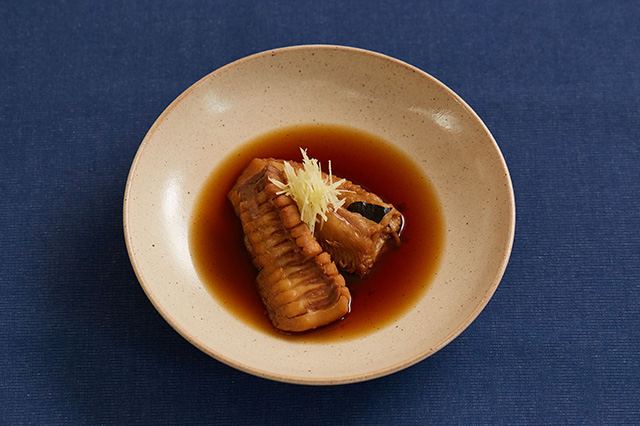
| Prefecture | Hokkaido (北海道) |
|---|---|
| Region | Hokkaido |
| Japanese name | カスベの煮付け(かすべのにつけ) |
| Reading | Kasubenonitsuke |
| Home area | It's not just the coast. It's also the coast. |
| Main ingredients | Kasbet. |
History and Origins
Cusbet stew is a winter local dish often built at home. "Cusbe" means "Aye" in the dialect of Hokkaido. Cavre bones belonging to the soft fish are soft and can eat everything from body to body. Because of the abundance of carolgens, they are now also noted for their beauty. There are various theories about the origin of names. In the past, when cooking was not established, the caviar, which produces the Anglo-Aursian odor in the body, is said to have been highly devoid of the smell, and it has been named because it is "a fish that is nothing but a fish that can be boiled or baked or eaten. " There are also other theories that come from the Inne language "kashmbe/ Kashpe." The Aines have been beating dried fish like "Cusbes" for years and eating them with boiled wild plants. But until recently, smell has not been valued for food, and has been used for fertilizers and other things. In the past, we had a way to smell and cook well, so we came to like it for food. What is often eaten at Hokkaido is the type of "glassescasbe" with large eyes on its back. It spreads widely in the northern part of the Japanese Sea. It is also known as "Massabeth." Also, Hokkaido can be eaten with a "Anu casabe" called "Anu casabe."
When It Is Eaten
The glasses are often eaten at Hokkaido. In the winter, the Kasbeh line the supermarket. They say it's cheap and easy to cook, and it's often served as a winter table in a private home. It's also popular as a bottle of wine.
How It Is Eaten
The recipe is to cut "Cusbes" into pieces and cook sugar, oil, wine, and so on. If you boil well, you can eat to the bone. When it's cooled, the colagen becomes a mass and a boiling pot, so it is delicious to put the tree on a plate and stick it on it. It is said that the "Cusbe" is alive because it will smell in the sun. When you cook it in boiling, it's hard to cook with a pepper and it has a bad smell.
Recipe — Serves 2
Ingredients
- 2 slices(200 g) kasbeh
- 100 g daikon radish
- 1 cloves ginger
- a pinch kelp (konbu)
- 1 cups water
- 1 tbsp soy sauce
- 1 tbsp beet sugar
Method
- The radish will rub the skin and cut the five-millimeter beat and the pepper will be cut into a piece.
- I put in a pot full of water and seasonings, but I put a cloth in it, put it on fire, and when it is boiling, I put a cask in it, and I can make a large root. I'll cook it for 15 minutes on the middle fire.
- The radish is soaked in the soup and is cooled and flavored.
Dish data: Ministry of Agriculture, Forestry and Fisheries (MAFF), “Uchi no Kyodo Ryori” (Our Regional Cuisines) database, used under the Public Data License (PDL1.0); translated and adapted from the Japanese original.