Sōmen にゅうめん
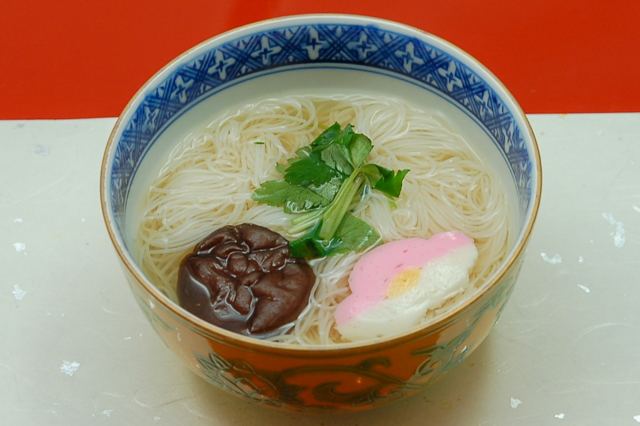
| Prefecture | Nara (奈良県) |
|---|---|
| Region | Kinki |
| Japanese name | にゅうめん |
| Home area | All within the province. |
| Main ingredients | It's soy sauce. |
History and Origins
The tricycle of Nara Prefecture Sakurai is the home of the noodles, and the noodles that are made here are called tricycle noodles. When the great shrine, the oldest shrine of the Japanese god, with three - wheeled temples with three - wheeled shrines, was dedicated more than 1200 years ago, and prayed for deliverance for the people who suffered from plague and hunger, it was believed that what had been poured out of three rings of wheat, ground to powder, and stretched out in water and made into silk was the origin of the peanut. The great god-do-do-it-yourself still is considered the patron god of noodles, and the altar of the festival, which covers the price of three-breasted three-breasted noodles for that year, is built at the shrine of the Great God. The oil and thinning technology was transmitted from China during the period of the period, and the process was almost completed in the days of the apartment town. Because the abundant water here has grown wheat and the water mills have developed, fine flour has been produced. Also, the intense cold of winter and the sunny weather were good for making noodles, and in the Edo Gymorge of the Japan Islands, the Three-Tree Noodles is the best quality you can find.
When It Is Eaten
In three rings of the country's famous noodles plant, there is a growing food culture that eats throughout the year as a cold noodles in summer and winter as a "sniff." It's said that "single" is another nickname for boiling noodles.
How It Is Eaten
Many uses have been absorbed, such as using pasta and spring rain at home. The extra recipes are with noodle carbonarra and baked noodles and noodles.
Recipe — Serves 4
Ingredients
- 100 g somen noodles (乾)
- 40 g shimeji mushrooms
- 24 g kamaboko (fish cake)
- 12 g mitsuba
- 800 ml dashi stock
- Mix: 1/2 tsp light soy sauce
- Mix: 1 tsp sake
- Mix: a pinch salt
Method
- The noodles are served in a bowl of boiling water, stir lightly, and cook well without washing them in cold water and then drain them.
- I've heated it, but I'll add a flavor A to the soup.
- I'll divide the hammer into cells and the pumpkins into three millimeters thick, cut in two and boil lightly.
- Put the noodles in the vessel, pour them with three tools, and add three leaves.
More About Sōmen
Sōmen (Japanese: 素麺), somyeon (Korean: 소면; Hanja: 素麵), sùmiàn (Chinese: 素麵) or soomin (Okinawan: 素麺) is a very thin noodle made of wheat flour, less than 1.3 mm in diameter. The noodles are used extensively in East Asian cuisines. Japanese sōmen is made by stretching the dough with vegetable oil, forming thin strands that are then air dried for later use. This is distinct from a similar thin noodle, hiyamugi, which is knife-cut.
In Japan, sōmen is usually served cold with a light dipping sauce called tsuyu. South Korean somyeon may be eaten in hot or cold noodle soups. Sōmen is typically high in sodium.
Other names are nyūmen (煮麺) in Japanese, for a version served warm in soup, and the Chinese name guàmiàn (Chinese: 掛麵), which can be further classified into lóngxū (Chinese: 龍鬚; lit. 'Dragon Whiskers') for the variant with long and thin strands and fèngwei (Chinese: 鳳尾; lit. 'Phoenix Tail') for the variant with flat and broad strands.
History
The earliest record for what would later be sōmen dates back to the Tang dynasty in 618-907 China. Around that time, the Japanese Imperial Court in Nara brought in some knotted pastry from China which they called sakubei/索餅 (most likely Chinese mahua/麻花). Sakubei later evolved into somen first in modern-day Sakurai, Nara's Miwa district during the Heian Period and then evolved to become high-class Japanese cuisine served to emperors and nobles. This transition from the knotted pastry (sakubei) to the thin noodle form we know today occurred primarily during the Kamakura period (1185–1333). This evolution was catalyzed by two major factors: the introduction of stone mills (ishiusu) by Zen Buddhist monks, which allowed for the production of fine wheat flour, and the development of the hand-stretching technique (tenobe) using vegetable oil. The oil prevented the dough from drying out, enabling it to be stretched into much thinner, delicate strands. By the late 14th century, the term somen (素麺) appeared in historical records such as the Kakaisho, marking its distinction from its predecessor.
East Asian cuisines
Japan
Sōmen are usually served cold with a light flavored dipping sauce or tsuyu. The tsuyu is usually a katsuobushi-based sauce that can be flavored with Japanese bunching onion, ginger, or myoga. In the summer, sōmen chilled with ice is a popular meal to help stay cool.
Sōmen served in hot soup is usually called nyūmen and eaten in the winter, just like soba or udon are.
Some restaurants offer nagashi-sōmen (流しそうめん flowing noodles) in the summer. The noodles are placed in a long flume of bamboo across the length of the restaurant. The flume carries clear, ice-cold water. As the sōmen pass by, diners pluck them out with their chopsticks and dip them in tsuyu. Catching the noodles requires a fair amount of dexterity, but the noodles that are not caught by the time they get to the end usually are not eaten, so diners are pressured to catch as much as they can. A few luxury establishments put their sōmen in real streams so that diners can enjoy their meal in a beautiful garden setting. Machines have been designed to simulate this experience at home.
In Okinawan cuisine, Soomin is used in stir fry such as Sōmin Chanpurū and Abura zoomïn.
Sōmen salad is usually served cold with noodles, the vinegar-based sauce, and the garnish. Some recipes include chicken broth, lemon juice, or sesame oil for mixing in the broth. The variety of garnish ranges from shredded lettuce, scallions, sesame seeds, slivered char siu or ham to scrambled eggs.
Korea
In Korean cuisine, somyeon is used in hot and cold noodles soups such as janchi-guksu (banquet noodles) and kong-guksu (noodles in cold soybean soup), as well as soupless noodle dishes such as bibim-guksu (mixed noodles). It is often served with spicy anju (food that accompanies alcoholic drink) such as golbaengi-muchim (moon snail salad).
Text adapted from the English Wikipedia article Sōmen by its contributors, licensed CC BY-SA 4.0.
Dish data: Ministry of Agriculture, Forestry and Fisheries (MAFF), “Uchi no Kyodo Ryori” (Our Regional Cuisines) database, used under the Public Data License (PDL1.0); translated and adapted from the Japanese original.