Takomeshi たこ飯
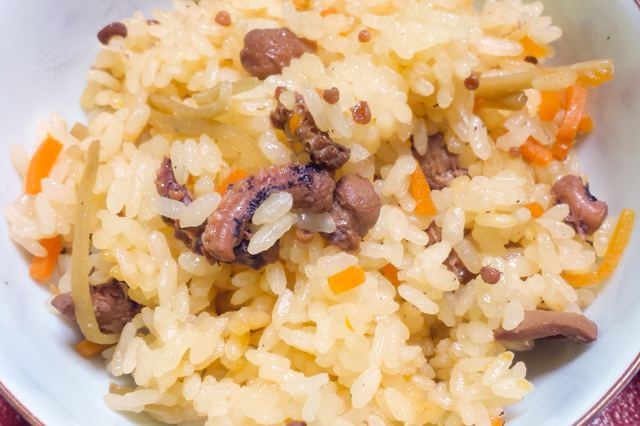
| Prefecture | Kumamoto (熊本県) |
|---|---|
| Region | Kyushu & Okinawa |
| Japanese name | たこ飯(たこめし) |
| Reading | Takomeshi |
| Home area | Aquiculture |
| Main ingredients | It's not just the food. It's the food. |
History and Origins
The "Dako" that spreads its legs, is hung, and is swaying in the wind is a summer poem from Akira, a city of a somewhat humorous landscape. It'll be three days and four days in good weather, from the rainy season until around September. It's never eaten like a sulme, but it's returned and used for cooking. The fishing is done in the old-fashioned way by sinking the oysters into the sea. The octopus has different meats according to where they are caught, but in the wild areas, they have elasticity and have a good reputation for good-natured silkworms all year round. They say that what is taken on the Nagasaki side of the clear sea is low in fat and is suitable for dry rice. The dried shrimp was originally a preserve food for winter, where the octopus has less fat, but the flavor is condensed, and it tastes good, so the "chik" often uses dried rice. There are ways to cut the dried rice into small pieces, make the beans, carrots and chicken, and so on, but there are ways to mix the octopus and the raw materials into rice from each home and region and then add them together. The water that has been dried and dried is used as a juice, so the seasoning is simple. In Fukuoka City, Japan, the raw materials are made from dried rice only so that they do not spoil the taste of octopus. The Noki City is also a special octopus that has been established in town, and the clear section of the 3124 National Road is called "The Garden and Open Street Road."
When It Is Eaten
In the wild regions, the traditional dish is a crescendo, and it's non-creative, so it's also used in Buddhist affairs. In Fukuoka town, it was often made with birthdays, athletics, and district receptions.
How It Is Eaten
I eat the cucumbers that are rich in the flavor of the octopus, along with the hot hot water. It's delicious even if it's cold, so you can have a lunch or a bowl.
Recipe — Serves 4
Ingredients
- 50 g dried octopus
- 40 g burdock root
- 40 g carrot
- 50 g eclipse
- 2 cups rice
- 2 cups 干しタコのもどし汁
- 1 cups water
- Mix: 1 tbsp sake
- Mix: 1/2 tbsp mirin
- Mix: 1 tbsp light soy sauce
- Mix: 1/2 tbsp dark soy sauce
- Mix: 1/2 tsp salt
- Mix: 1 tbsp sugar
Method
- Wash the rice for about 30 minutes, soak it and cook it.
- The dried octopus is boiled in boiling water and wine for about ten minutes. When I get soft, I cut it small.
- Your son cuts the carrots, and then he cuts them small.
- Put a few of them in the pan and put some soup, water, flavor A in the pan and cook the dishes.
- I mix the dishes with the cooked rice.
More About Takomeshi
The rice is rice from an octopus and is one of the local dishes. There's something to cook with an octopus, something to put or mix boiling octopus on rice, or something to combine both.
Also made from the Pacific octopus, at Ibaraki Prefecture.
The pine cone.
It's a cook-in-the-box. Although the origin is unknown, it is believed that fishermen on the fishing boat cut up the octopus and put it into their food. In the beginning, I was born in the sand, where there are many shrimps, crabs, oysters, and octopus growths. The 200-pound daco, or "tree sprout," which appears first in spring, is pressed and delicious. Also, since nutrients - containing water enters the ocean during the rainy season, it is thought that octopus growth and this season also have a unique flavor.
An example of materials and construction.
(Singing)
1 / 2 cup [1.4 L] of raw rice, 3 cups [1.3 L] of citrus oil, 4 oz [45 oz] of wine...
How?
I can't get rid of the dirty dishes just because they're simple and light. First, salting the leg of a live daco, hand-to-hand, and remove the surface slip. And I'll clean up the stains in the inhaler using my fingers. The octopus is cut to the right size and lightly beat with the knife's back. Next, wash the rice, put it on a monkey for about 15 minutes, and cut the water well.
Put the rice in the rice cooker and pour all the flavors and flavors gently together. Finally, put the octopus in and switch it on and cook it up.
If you use raw silk, it will be painted with a pretty color, like red rice. You can use your taste to pick up the sprouts and the blues.
Station valve
What is sold at the following station is famous.
Toshihara Station, Fukuyama Station, Fukuyama Station, Hawa Station, Shinji Station. The "single" is the Long Island Station valve that began to be released in 1953. - "I'll eat you." Using a canister of citrus. - "The Akira-sama-sama soup plate." I'll have rice later. - "three beach lunches." I'm carrying a slice of rice on the rice bowl.
Annotations, Sources
Text adapted and translated from the Japanese Wikipedia article たこめし by its contributors, licensed CC BY-SA 4.0.
Dish data: Ministry of Agriculture, Forestry and Fisheries (MAFF), “Uchi no Kyodo Ryori” (Our Regional Cuisines) database, used under the Public Data License (PDL1.0); translated and adapted from the Japanese original.