Warigobentō わりご弁当
| Prefecture | Kagawa (香川県) |
|---|---|
| Region | Shikoku |
| Japanese name | わりご弁当(わりごべんとう) |
| Reading | Warigobentō |
| Home area | Little Island Area |
| Main ingredients | I'm not sure if you want to do it. I'm sure you'll like it. |
History and Origins
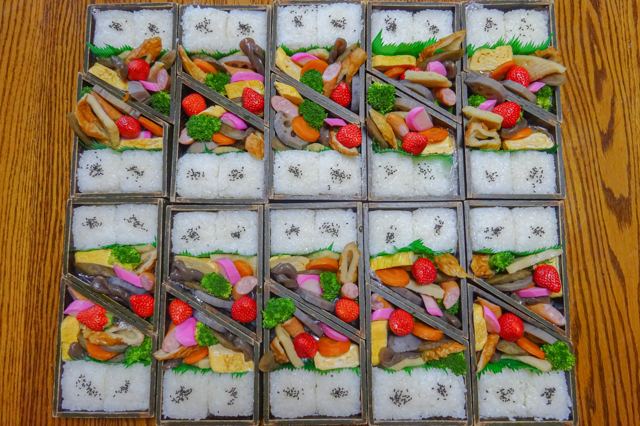
On the Little Island of the Inland Sea, the Kozusuji Koo, on May 3th each year, will host the Kojiji Koyama Riku. This is a traditional practice that was supposed to have begun to celebrate the completion of the pond for agriculture in the past, and it has continued since the time of Edo and is designated as the province's non-prime culture. It is a lunch that has been eaten between this Kabuki performance and other times. Many lunches have been cut in half from the middle into two squares. It's long been kept two and one-on-one, and I've been carrying 40 20 people in a black-painted wooden box, and it's been used since peacetime. Even now, this coffee is used only on the island of Ozu Island. It has been inherited from old age. It's the inside of its own screen. The lunches are filled with various local foods, and we enjoy the colorful dishes, and we eat them together at Kabuki's place.
When It Is Eaten
You can eat it at Kabuki Kojimura's Farm, which is held on the island of Kozu on May 3rd each year. It's made up of about 20 pieces in each home, and you can bring them together and share them with you.
How It Is Eaten
A lunch with a blend of cooked rice and stewed rice with a special wooden frame. Cooking ingredients are delicious, and they are delicious, and they are delicious, and they are delicious. The other ones, such as egg-burning cucumbers, are colorfully packed with lunches. Since cooking utensils are different from each household, you can bring a lunch and enjoy a variety of tastes.
Recipe — Serves 20
Ingredients
- Cooked rice: 12 × 180 ml rice
- Cooked rice: 14.4 × 180 ml water
- Cooked rice: vinegar, to taste
- Cooked rice: a pinch salt
- その他のおかず (egg - roasting), to taste
- Mix: 1 burdock root
- Mix: 3 tbsp dashi soy sauce
- Mix: 2 tbsp mirin
- Mix: 300 ml water
- Mix: 2 carrot
- Mix: 2 tbsp dashi soy sauce
- Mix: 2 tbsp mirin
- Mix: 2 tbsp sugar
- Mix: a pinch dashi stock
- Mix: 300 ml water
- Mix: 1 lotus root
- Mix: 3 tbsp dashi soy sauce
- Mix: 3 tbsp mirin
- Mix: 500 ml water
- Mix: 2 konnyaku
- Mix: 3 tbsp dashi soy sauce
- Mix: 2 tbsp mirin
- Mix: 400 ml water
- Mix: 4 chikuwa (fish cake tube)
- Mix: 3 tbsp dashi soy sauce
- Mix: 3 tbsp mirin
- Mix: 500 ml water
- Mix: 2 kamaboko (fish cake)
- Mix: 1 tbsp dashi soy sauce
- Mix: 300 ml water
- Mix: 4 kamaboko (fish cake)
- Mix: 3 tbsp dashi soy sauce
- Mix: 3 tbsp mirin
- Mix: 500 ml water
Method
- I cook rice.
- I'll cut off the cooking gear. Carrots and onions are cut in half. There's hot water in here, and it's really hard. Cut the bowl, cut the bladder on a diagonal, and put it on water.
- I'll cook my cooking utensils with a favorite flavor, such as sesame oil, garlic and sugar. It's good to add a little more flavor to your eyes.
- I'll make other mushrooms.
- With vinegar on your hands, you can round the cooked rice, put it in a rice box with vinegar, and then put it in a pan- only pan, and put the salt in the middle.
- Cooking lunch boxes with rice, boiling them, baking eggs, and so on.
Dish data: Ministry of Agriculture, Forestry and Fisheries (MAFF), “Uchi no Kyodo Ryori” (Our Regional Cuisines) database, used under the Public Data License (PDL1.0); translated and adapted from the Japanese original.