Home / Kumamoto / Jyabara Daikon No Nimono
Jyabara Daikon No Nimono 蛇腹大根(房切り大根)の煮物(じゃばらだいこん(ふさきりだいこん)のにもの)
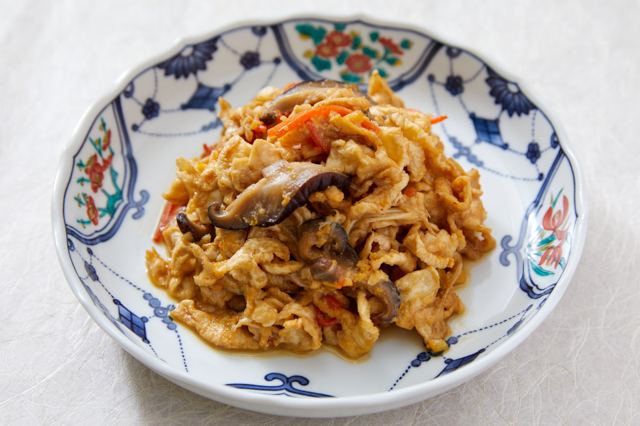
| Prefecture | Kumamoto (熊本県) |
|---|---|
| Region | Kyushu & Okinawa |
| Japanese name | 蛇腹大根(房切り大根)の煮物(じゃばらだいこん(ふさきりだいこん)のにもの) |
| Home area | South Assistance |
| Main ingredients | (Sniffles and crinkles) |
History and Origins
The large belly of the snake is a dry root that has been made since the time of winter in the south of the Aussies. It's also called the cuddly root and the cutting root. It's made even in the blue neck, but often it uses the "ideal root," which is a dry root. I'm going to make a knife so that the cut is unique and that the root is laid on the side and that it is cut into two-and-a-half-millimeter strips. At this time, you should leave the lower side about five millimeters to keep it from being cut off, but you should put the vegetable chopsticks next to the root so that it doesn't cut down. Turn the cut upside down, and the cut between two and three millimeters will be on the diagonal. If you cut it to the end, it will stretch like a snake's belly and it will be three times longer. (There is also a way to cut a fresh raw root root root, which is hard and spread easily, so if you can't hang it in a pot and hang it as dry as it is, then you can hang it up on a bush and cut it off for a few days or a week.) This narrows it down so it doesn't take up much space and it gets dry faster. The finished product was stored in cans and bottles and made into food all year round. The sun's drought condensed the flavor and nutrients, increased the calcium, iron, and food fiber, so it was important to cut in the spring vegetables from winter to spring. When cooking, it is returned with water and is used mainly for stew, vinegar and soy sauce. The unique taste of the paris is different from the taste of raw roots. Water with dried roots is also good, so it is often used. The stews in the Resurrected region are made from seasonal vegetables, oil, oil, garlic, and so on, and so forth, but it is customary to cook them with soy sauces. In the festival, Buddha, and in the celebration, it is always customary to cook them.
When It Is Eaten
We'll dry it on the cold winter winds. It's a winter wind poem that's been hung up like white flowers in the South Assemble region. Most of the food used in winter and spring is preserved, but it was used all year long because it is long preserved. The stew containing the snake's belly is always served at the wedding feast.
How It Is Eaten
The root of the snake is also used in boiling, vinegar, roasting, and so on. It's the duty of the cook to go into the stew.
Recipe — Serves 3
Ingredients
- 1 daikon radish (切りかけ)
- 3 shiitake mushrooms
- 1/2 carrot
- 1/2 green onion
- 2 egg
- 1/2 cups soy sauce
- 1 tbsp1/2 sugar
- a pinch oil
Method
- (scattering on the belly) Big root: Use leaves and leaves and what you dry and boil on a fine day. Cut straight to seventh minute at three millimeter intervals. Put down the cut and cut down to the seventh minute at three millimeter intervals. On a sunny day, when you dry, when you get soft, when you dry, when you dry, when you dry, when you dry, when you dry, when you dry, and when you dry, you dry. I'll finish it three times as long as the raw root.
- You can wash the rice in water, and the lattice roots in the soft water for two minutes and three minutes. And I'll leave two or three minutes on top of the board.
- The carrots, bows and arrows are cut into strips. I'll wipe the water from the root of the snake and cut it to about one centimeter.
- I'll cook it in a pot of oil with a large stomach and a large stomach and a carrot in order to cook it in the middle of the fire.
- Then add a small amount of water or wine.
- I'll put sugar and soy sauce in a little bit.
- Put in your bow.
- Two eggs were taken and mixed quickly.
Dish data: Ministry of Agriculture, Forestry and Fisheries (MAFF), “Uchi no Kyodo Ryori” (Our Regional Cuisines) database, used under the Public Data License (PDL1.0); translated and adapted from the Japanese original.